
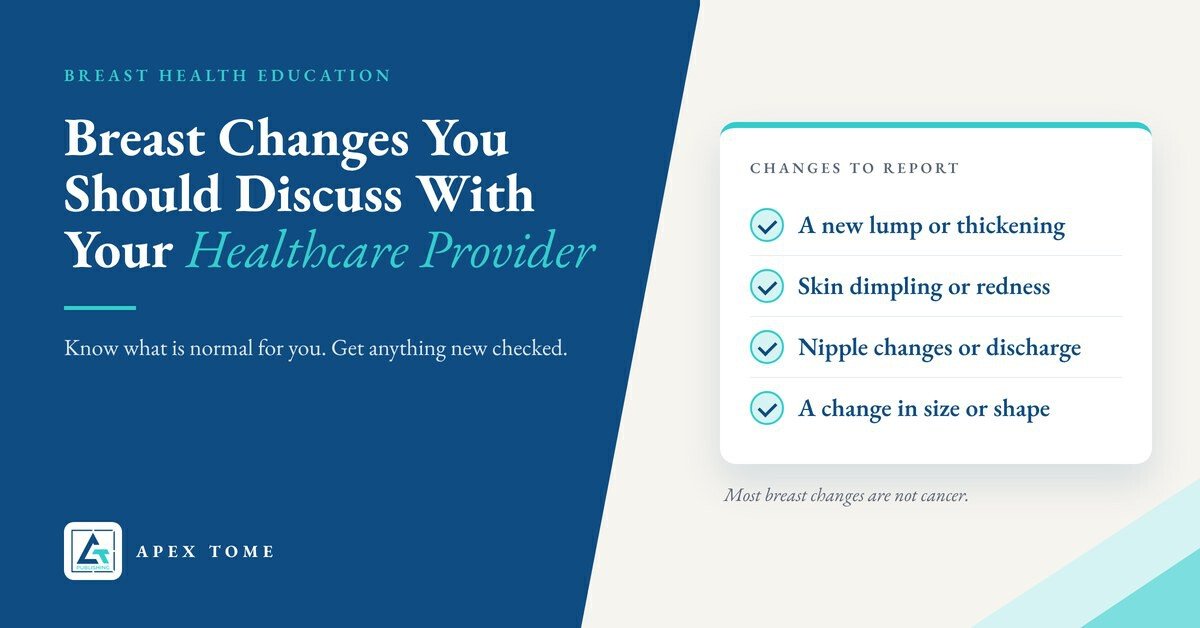
Breasts naturally change over time with age, menstrual cycles, pregnancy, and menopause. Knowing how your breasts normally look and feel makes it easier to notice when something is different. Most breast changes are not cancer, but some should always be checked by a healthcare provider.
Changes to Watch For
Contact your healthcare provider if you notice any of the following:
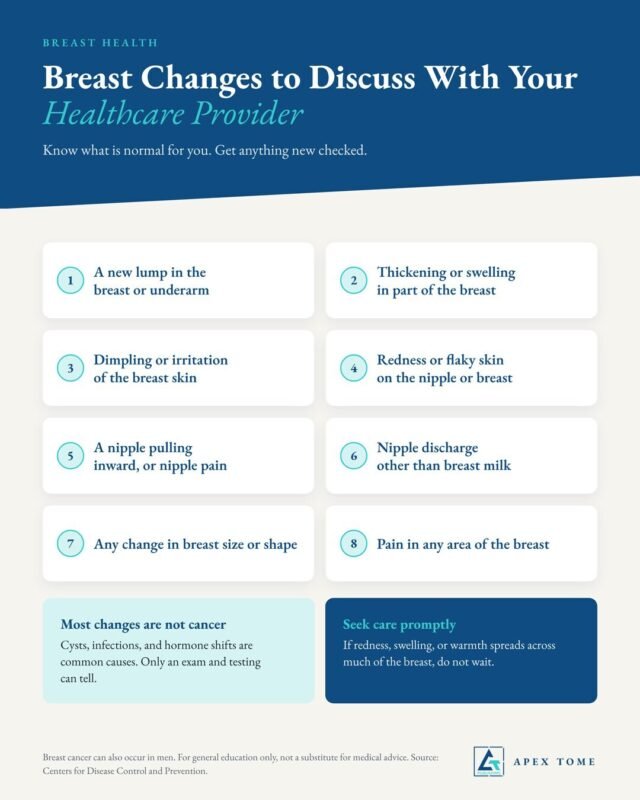
- A new lump in the breast or underarm
- Thickening or swelling in part of the breast
- Dimpling or irritation of the breast skin
- Redness or flaky, scaly skin on the nipple or breast
- A nipple that pulls inward, or new pain in the nipple area
- Nipple discharge other than breast milk, including blood
- Any change in the size or shape of a breast
- Pain in any area of the breast
Breast cancer can also occur in men. Men should report a lump or other change near the nipple as well.
Most Breast Changes Are Not Cancer
Many conditions can cause these symptoms, including cysts, fibrocystic changes, noncancerous growths, infections, and normal hormonal shifts. Still, you cannot tell the difference by touch or appearance alone, and only a medical evaluation can determine the cause. Getting a change checked promptly either brings peace of mind or allows earlier treatment if something is found.
Do Not Wait for Your Next Mammogram
A normal mammogram in the past does not rule out a new change. If you notice something unusual, make an appointment even if your last screening was recent.
Seek care promptly if redness, swelling, or warmth spreads across a large part of the breast, or if the skin looks thickened or pitted like an orange peel. These signs are often caused by infection, but they can also be caused by a rare, fast-growing type called inflammatory breast cancer. If you are treated for an infection and the symptoms do not improve, follow up with your provider.
Preparing for Your Appointment
Before your visit, it can help to write down:
- When you first noticed the change, and whether it has changed since
- Whether it varies with your menstrual cycle
- Your family history of breast, ovarian, or other cancers
- Any medications or hormones you take
Your provider may examine you and order a diagnostic mammogram or ultrasound to learn more.
If a breast change leads to a breast cancer diagnosis, our guide Newly Diagnosed with Breast Cancer can help you understand your results and treatment options in plain language.
