
Pain between the scrotum and rectum, burning when you urinate, or a constant urge to go can be unsettling, especially when the symptoms linger or keep coming back. One possible explanation is prostatitis, a term for inflammation of the prostate and sometimes the area around it. Prostatitis is not one condition. It is a group of four related conditions with different causes, different levels of urgency, and different treatments. One type is a sudden bacterial infection that needs prompt medical care. The most common type is a long-term pain condition that is not caused by an active infection at all. This article explains the types, the symptoms that set them apart, how clinicians sort out which one is present, and when to seek care.
What Is Prostatitis?
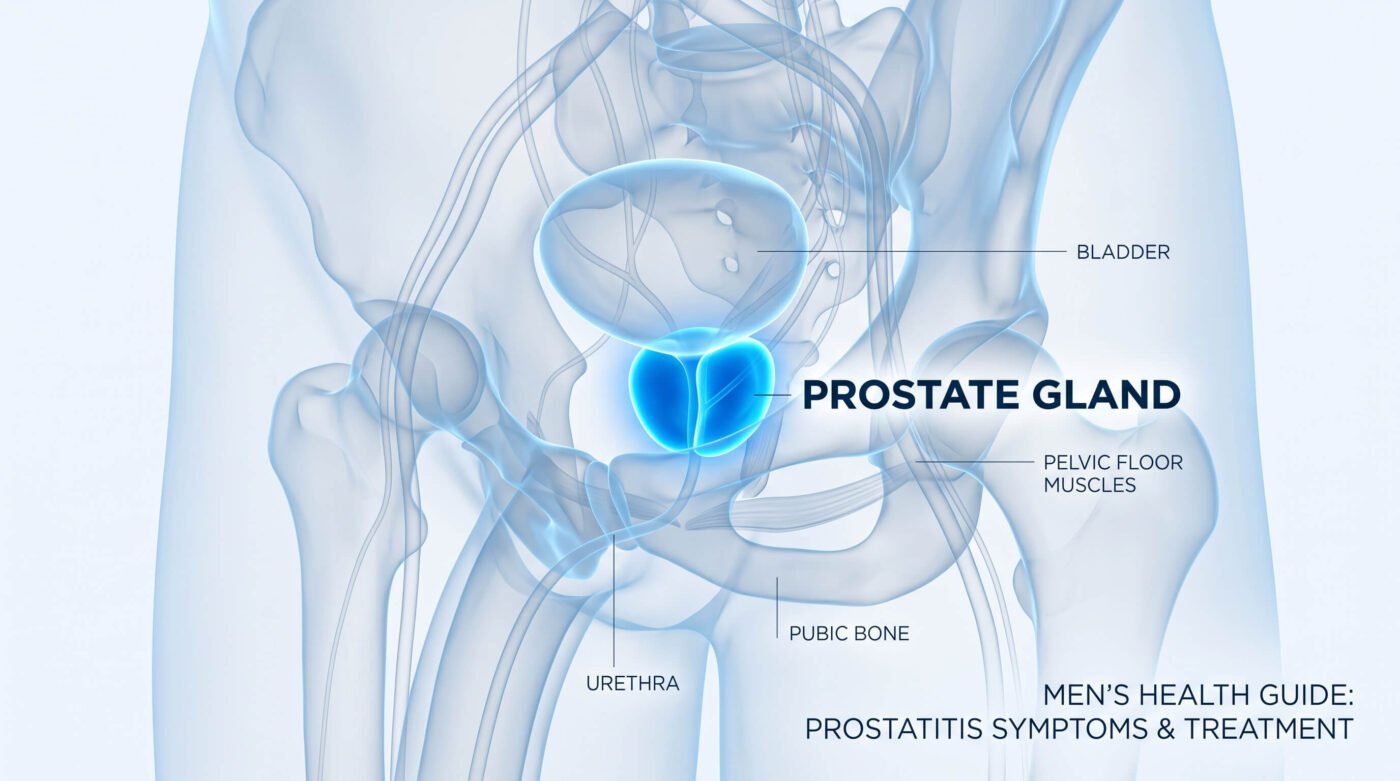
The prostate is a walnut-shaped gland that sits just below the bladder and in front of the rectum. It wraps around the urethra, the tube that carries urine out of the body, and it makes part of the fluid in semen. Because of that location, a problem in or near the prostate often shows up as urinary symptoms, pelvic pain, or discomfort with ejaculation.
Prostatitis can affect men of any age. According to the National Institute of Diabetes and Digestive and Kidney Diseases (NIDDK), it is the most common urinary tract problem in men younger than 50. It is a different condition from an enlarged prostate, also called benign prostatic hyperplasia or BPH, and from prostate cancer, although some symptoms overlap. If you are sorting through those differences, the [INTERNAL LINK: MEN’S HEALTH CATEGORY] section of Apex Tome covers related prostate topics.
The Four Types of Prostatitis
Clinicians use a classification developed through the National Institutes of Health. Knowing the type matters because the right treatment for one can be the wrong treatment for another.
| Type | What it is | How it usually behaves |
|---|---|---|
| Acute bacterial prostatitis | A sudden bacterial infection of the prostate | Comes on quickly, often with fever and chills. Needs prompt medical care. |
| Chronic bacterial prostatitis | A bacterial infection that lingers or keeps returning | Milder symptoms lasting three months or more, often with repeat urinary tract infections |
| Chronic prostatitis/chronic pelvic pain syndrome (CP/CPPS) | Long-lasting pelvic pain without a bacterial infection found on testing | The most common type. Symptoms may come and go for months or years. |
| Asymptomatic inflammatory prostatitis | Inflammation found by chance during testing for something else | No symptoms. NIDDK notes that it does not cause complications or need treatment. |
The bacterial types usually start when bacteria travel from the urethra into the prostate. Men who have had urinary tract infections, especially ones that recur or are hard to clear, are more likely to develop them.
CP/CPPS is less well understood. The American Urological Association (AUA) 2025 guideline on male chronic pelvic pain states that the cause is unknown and that the condition is not due to an ongoing infection. Researchers now view it as a mix of factors that can include the nervous system, the pelvic floor muscles (the muscles that support the bladder and bowel), the immune system, and psychological stress. NIDDK also lists nerve damage in the lower urinary tract from surgery or injury as a possible risk factor.
Prostatitis Symptoms by Type
Symptoms vary from one man to the next, and many of them also occur with other conditions.
Acute bacterial prostatitis tends to be sudden and severe. Symptoms can include:
- Fever and chills
- Burning or pain during urination
- Frequent, urgent urination, including at night
- Pain in the genital area, groin, lower abdomen, or lower back
- Trouble starting a urine stream, a weak stream, or being unable to urinate
- Nausea, vomiting, or body aches
Chronic bacterial prostatitis causes similar urinary and pain symptoms, but they are usually milder. They may fade and return, sometimes after a urinary tract infection or an earlier episode of acute prostatitis. Painful ejaculation can also occur.
CP/CPPS is defined mainly by pain. The AUA describes it as pain or discomfort in the pelvic region for at least three months within the past six months, with no other identifiable cause. Common features include:
- Pain in the perineum (the area between the scrotum and anus), lower abdomen, penis, testicles, or lower back
- Pain during or after ejaculation
- Pain with urination
- Urinary frequency, urgency, or a weak or interrupted stream
- Sexual difficulties, including erectile dysfunction
The pain may sit in one spot or spread across the pelvis, and it may flare and settle without an obvious trigger.
How Prostatitis Is Diagnosed
There is no single test for prostatitis. A clinician starts with your symptoms and medical history, then performs a physical exam. That exam often includes a digital rectal exam, in which a gloved, lubricated finger is used to feel the prostate through the rectum for tenderness or swelling. The AUA guideline also recommends checking the pelvic floor muscles and the scrotum, because muscle tenderness and other conditions can cause similar pain.
Common tests include:
- Urinalysis and urine culture. A urine sample is checked for signs of infection, and a culture identifies any bacteria so the right antibiotic can be chosen.
- Blood tests. These can show signs of infection or other prostate problems.
- Symptom questionnaires. Standard questionnaires, such as the NIH Chronic Prostatitis Symptom Index, help track pain, urinary symptoms, and quality of life over time.
- Additional testing when the picture is unclear. This may include measuring how well the bladder empties, a cystoscopy (a thin scope used to look inside the urethra and bladder), or imaging.
CP/CPPS is what clinicians call a diagnosis of exclusion. That means it is diagnosed after other causes, such as a urinary tract infection, a narrowed urethra, a bladder condition, or cancer, have been ruled out. You may be referred to a urologist, a doctor who specializes in the urinary tract and male reproductive system.
One practical point: prostatitis can raise the level of prostate-specific antigen (PSA) in the blood. The National Cancer Institute notes that infection or inflammation of the prostate can keep PSA elevated for a month or two. If you have a PSA test planned, tell your clinician about recent prostate symptoms. Our guide, Understanding Your PSA Test explains what else can affect the number.
Treatment Overview: It Depends on the Type
Treatment decisions belong to you and your healthcare team. What follows is a general picture of how each type is commonly approached.
Acute bacterial prostatitis is treated with antibiotics, usually for several weeks. Severe cases may require a short hospital stay for fluids and antibiotics given through a vein. NIDDK reports that most cases clear up completely with treatment. Finishing the full course as prescribed matters, because the infection can return.
Chronic bacterial prostatitis is also treated with antibiotics, but for a longer period. If infections keep returning, a urologist may change the antibiotic or the approach.
CP/CPPS is managed differently because infection is not the driver. The AUA guideline advises clinicians against repeated courses of antibiotics when urine cultures are negative. Instead, it supports combining several approaches based on a person’s symptoms. Options a clinician may discuss include:
- Alpha-blockers, medications that relax muscle near the prostate and bladder, for men with urinary symptoms
- Anti-inflammatory medications and other non-opioid pain relievers
- Medications that target nerve-related pain
- Pelvic floor physical therapy and biofeedback for men with tender or tight pelvic muscles
- Cognitive behavioral therapy, a structured form of counseling, alongside other treatment
- Lifestyle changes, such as aerobic exercise and adjusting foods or drinks that seem to worsen symptoms
- Other therapies, such as acupuncture or low-intensity shockwave therapy
No single treatment works for every man, and finding the right combination can take time. Some plant-based supplements, including saw palmetto and quercetin, have been studied for CP/CPPS. Supplements can interact with medications, so discuss them with your clinician or pharmacist before using them. For more on the other common prostate condition, see [INTERNAL LINK: ENLARGED PROSTATE (BPH) EXPLAINED].
NIDDK states that prostatitis cannot be reliably prevented and that diet has not been shown to cause it.
When to Contact a Healthcare Professional
Symptoms of prostatitis overlap with those of urinary tract infections, bladder problems, BPH, and, less often, prostate cancer. That overlap is the main reason not to self-diagnose.
Schedule a routine visit if you have pelvic, genital, or lower back discomfort, pain with urination or ejaculation, or urinary changes that last more than a few days or keep returning.
Seek prompt medical attention, the same day if possible, for painful, frequent, or urgent urination together with fever or chills, or for blood in your urine.
Go to an emergency department or call 911 if you cannot urinate at all, if you have severe pain in the lower abdomen or urinary tract, or if you have a high fever with shaking chills, confusion, or a feeling of being very ill. Untreated acute bacterial prostatitis can lead to a bloodstream infection or an abscess (a pocket of pus) in the prostate.
Most men with prostatitis symptoms do not have an emergency. The purpose of these categories is to help you match the response to the symptoms.
Questions to Ask at Your Appointment
- Which type of prostatitis do my symptoms and test results suggest?
- Was bacteria found in my urine culture?
- What other conditions are you ruling out?
- What are the benefits and risks of the treatment you recommend, and how long before I should notice a change?
- Would pelvic floor physical therapy or a referral to a urologist make sense for me?
- Could my symptoms affect a PSA test, and should the timing change?
- What symptoms should prompt me to call you or seek urgent care?
Keeping a short log of your symptoms, including when they flare and what seems to help, can make that conversation more productive.
Learn More
Prostatitis is one of several conditions that can affect the prostate, and the differences among them are easier to follow with the full picture in view. For a more detailed explanation of symptoms, testing, treatment options, and questions to discuss with your healthcare team, explore the Prostate Health Handbook from Apex Tome. It covers PSA testing, BPH, and screening decisions in plain language, so you can walk into your next appointment better prepared.
This article is for general education and is not a substitute for personalized advice from a qualified healthcare professional.
