
Digestive & Liver Health
The Diabetes-Liver Connection
Sep
If you have type 2 diabetes or prediabetes, there’s a good chance your liver is already involved — and almost no one is telling you that clearly.
Here’s a statistic that surprises most people the first time they hear it: if you have type 2 diabetes, you have somewhere between a 55 and 70 percent chance of also having fatty liver disease right now, whether or not anyone has ever mentioned it to you.1 Not a chance of developing it someday. A chance of already having it.
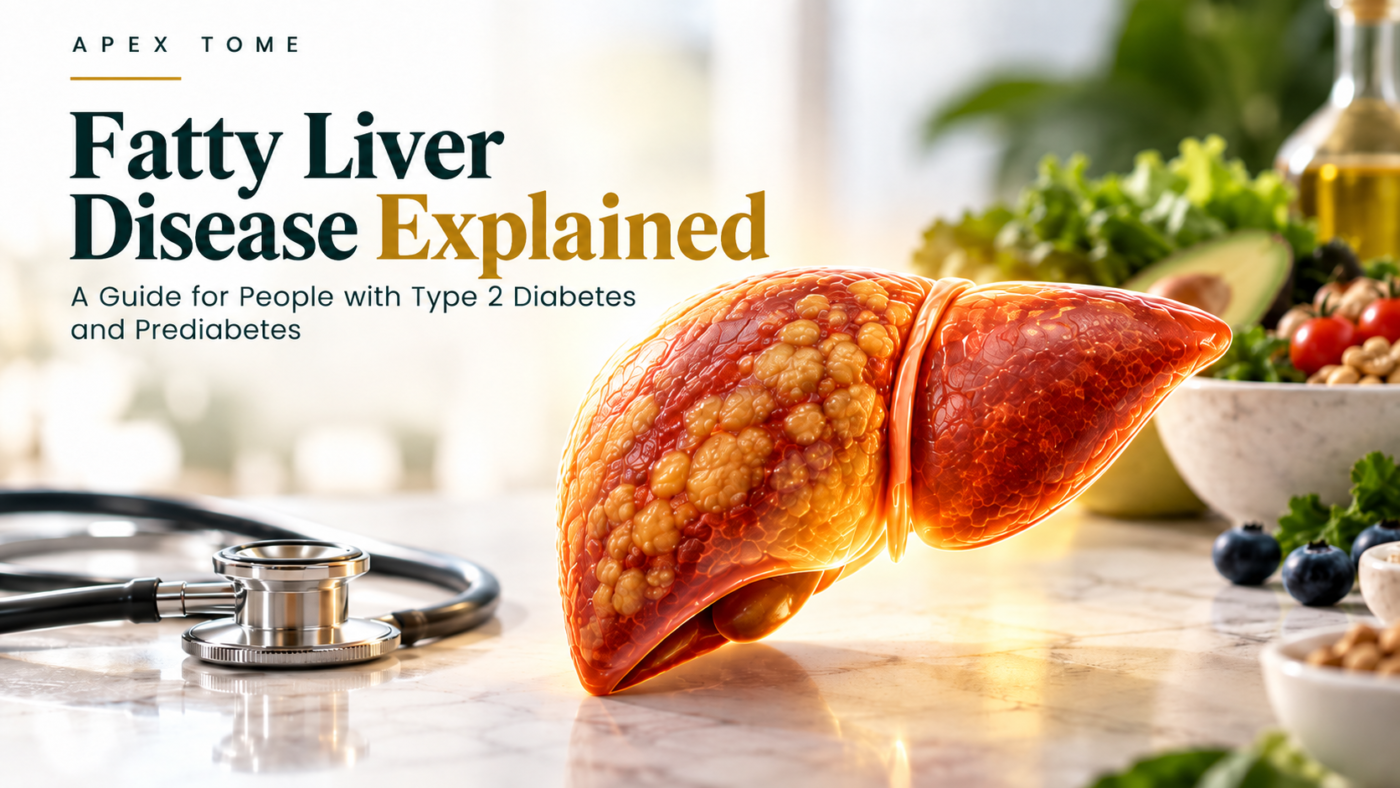
Most people never hear this. Fatty liver disease has a habit of hiding in plain sight, showing no symptoms until it’s more advanced, and getting mentioned, if at all, as a passing note in an appointment that was really about something else. That gap between how common this condition is and how little most patients understand about it is exactly why we wrote Fatty Liver Disease Explained: A Guide for People with Type 2 Diabetes and Prediabetes.
Why Diabetes and Fatty Liver Show Up Together
The connection isn’t a coincidence, and it isn’t bad luck. Both conditions trace back to the same root cause: insulin resistance. When your cells stop responding well to insulin, your pancreas compensates by producing more of it. Over time, that excess insulin pushes your liver to pull in more fat, manufacture more fat internally, and export less of it than it should. The result is a liver that’s quietly storing more fat than it’s built to handle.
It’s a two-way relationship, too. A fatty liver doesn’t just result from insulin resistance, it actively makes insulin resistance worse, which is part of why the two conditions tend to travel together and reinforce each other over time.
55–70%
of people with type 2 diabetes are estimated to have fatty liver disease, compared with roughly a quarter to 40 percent of the general population.1
The Part Most People Get Wrong: It’s Often Reversible
This is the piece that tends to get lost in translation. Fatty liver disease is not a life sentence, and for most people diagnosed at an early stage, it responds meaningfully to the same lifestyle changes that support healthy blood sugar.
One of the most detailed studies on this question followed nearly 300 patients with confirmed liver inflammation through a year-long, structured lifestyle program. The pattern was clear and encouraging: patients who lost 7 to 10 percent of their body weight saw their condition resolve about 64 percent of the time. Patients who lost 10 percent or more saw resolution in 90 percent of cases.2 Even a 5 to 7 percent weight loss, something as modest as 10 to 14 pounds for many people, produced real, measurable improvement for roughly a third of patients.
Exercise tells a similarly hopeful story, and not just through weight loss. Research has found that structured exercise reduces liver fat significantly even in people whose weight doesn’t change at all, because movement improves how your muscles and liver respond to insulin directly.3
Three Places to Start
Ask for the right test. A normal liver enzyme result doesn’t rule out fatty liver disease, particularly if you have diabetes. If you haven’t been screened, it’s a reasonable, specific thing to ask your doctor about at your next visit.
Build meals around a Mediterranean-style pattern. Vegetables, legumes, whole grains, olive oil, nuts, and fish, with less added sugar and refined carbohydrate, has the strongest evidence behind it for improving liver fat and blood sugar together.
Move most days, in whatever form fits your life. Roughly 150 minutes a week of brisk walking, plus two short strength sessions, is enough to make a measurable difference, according to the research.
None of this requires perfection, and it doesn’t require dramatic, unsustainable changes. It requires consistency, an informed starting point, and a plan you can actually keep up with for months, not days.
NEW FROM APEX TOME
Fatty Liver Disease Explained
A complete, evidence-based guide to understanding your diagnosis and building a realistic plan, covering diagnosis, diet, exercise, weight management, monitoring, and how to talk to your doctor about it.
Get the Guide
This article is for general educational purposes and is not a substitute for professional medical advice, diagnosis, or treatment. Always talk to your doctor about your own test results, risk factors, and care plan.
