
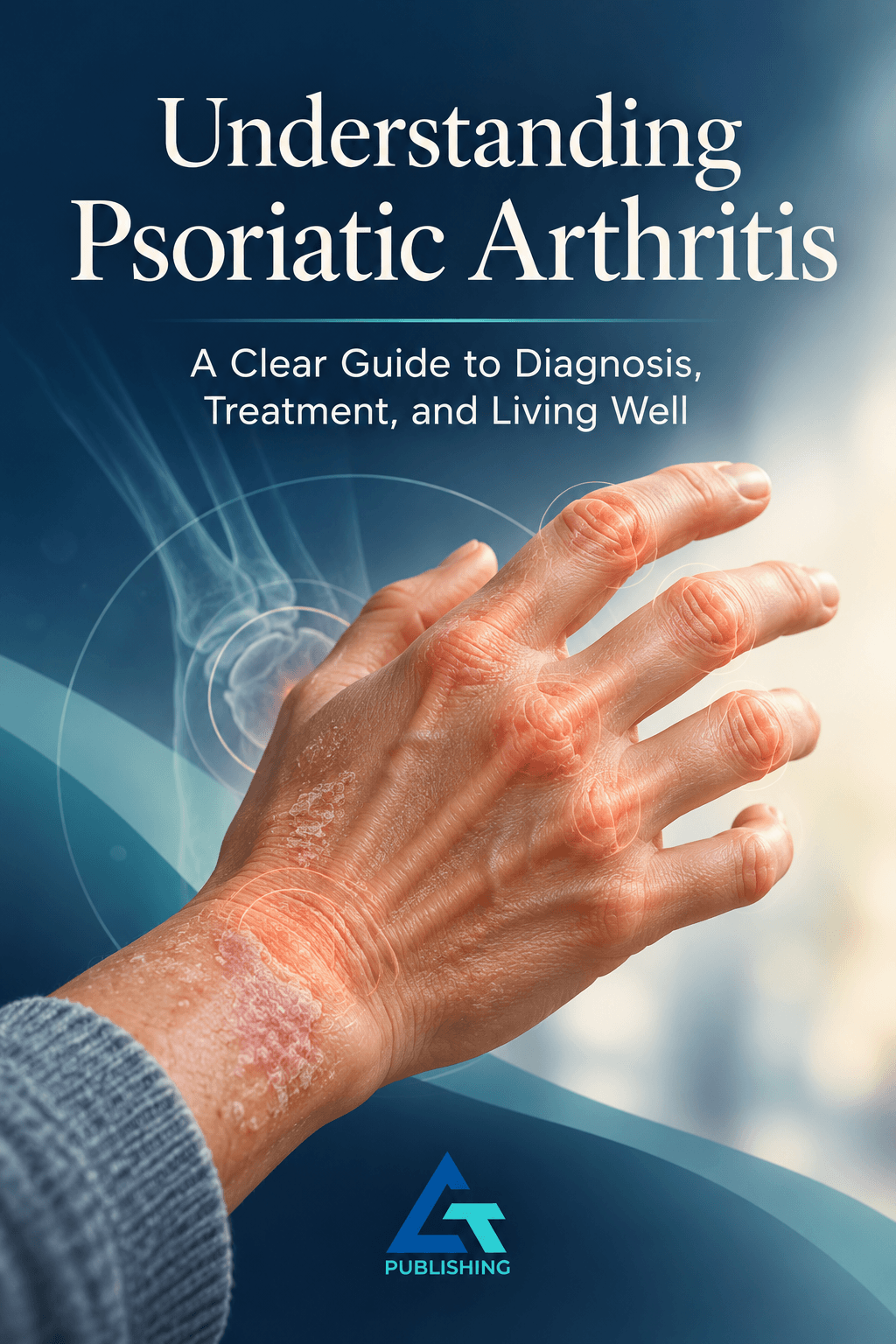
A diagnosis of psoriatic arthritis often arrives with an unfamiliar name and a long list of questions. What is happening in my body? How do doctors know? What are my treatment options, and what are the risks? What does this mean for work, family, and the future?
Understanding Psoriatic Arthritis brings the answers together in one place and explains them in plain language. Written for everyday readers, it follows the order in which most people’s questions arise, from first symptoms through diagnosis, treatment, and long-term management.
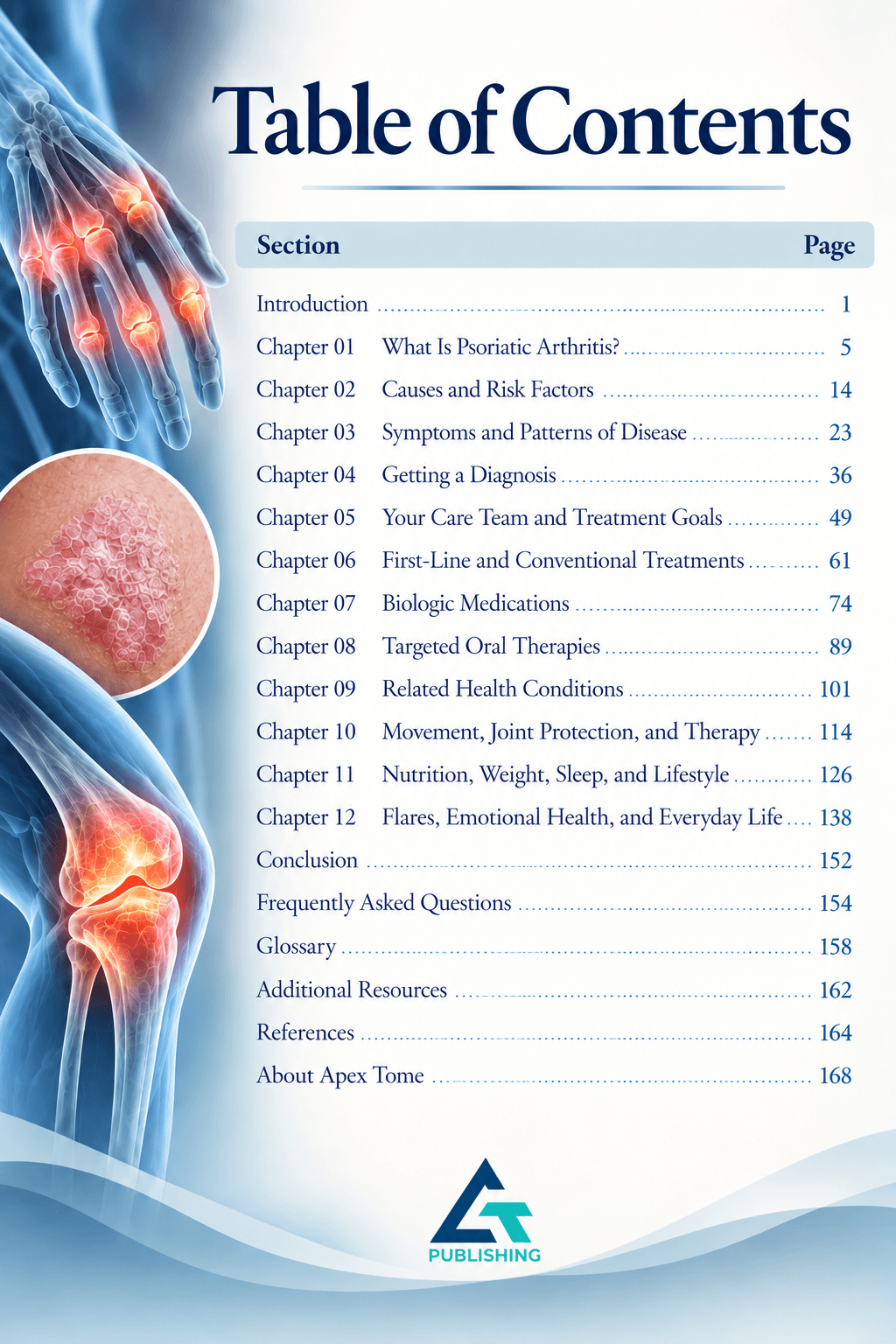
Inside the guide
- What psoriatic arthritis is, and how it differs from rheumatoid arthritis, osteoarthritis, and gout.
- What is known, and not yet known, about causes and risk factors.
- The full range of symptoms, including enthesitis, dactylitis, spinal involvement, nail changes, and fatigue.
- How the diagnosis is made, what blood tests and imaging can and cannot show, and how to prepare for a rheumatology appointment.
- The goals of treatment and how you and your care team can make decisions together.
- Each major group of medications explained: conventional treatments, biologics, and targeted oral therapies, including what they do, their main risks, and the monitoring they require.
- Related health conditions affecting the heart, metabolism, eyes, bowel, and mood, and how they are detected.
- Practical guidance on physical activity, joint protection, nutrition, sleep, and fatigue.
- Planning for flares, emotional health, work, relationships, family planning, travel, and treatment costs.
Designed to be used
The guide includes comparison tables, appointment checklists, lists of questions to ask your care team, a personal flare plan template, a glossary of 47 terms, and answers to 14 frequently asked questions. Each chapter ends with key takeaways.
Evidence-informed and candid about uncertainty
The content draws on sources such as the National Institutes of Health, FDA prescribing information, professional treatment guidelines, and peer-reviewed research, all listed in a references section. Where the evidence is limited or experts disagree, the guide says so. It makes no promises of a cure and does not claim that any diet or supplement can replace medical treatment.
Please note
This is an educational publication. It is not a substitute for professional medical advice, diagnosis, or treatment, and it does not provide medication doses or personal treatment recommendations. Always consult a qualified healthcare professional about your own situation. Medical information changes over time. The treatment chapters reflect information available in October 2026.