
“It’s just the flu” is only half the story.
For most healthy people, influenza means several miserable days and a full recovery. It also sends hundreds of thousands of Americans to the hospital in a typical year. Knowing how both of those things can be true is the starting point for protecting yourself and the people you care about.
Influenza: How to Reduce Your Risk and Protect Your Health gathers the essential information into one organized, plain-language guide. It draws on public health sources such as the CDC and FDA, and it tells you plainly where the evidence is strong, where it is limited, and where guidance may change.
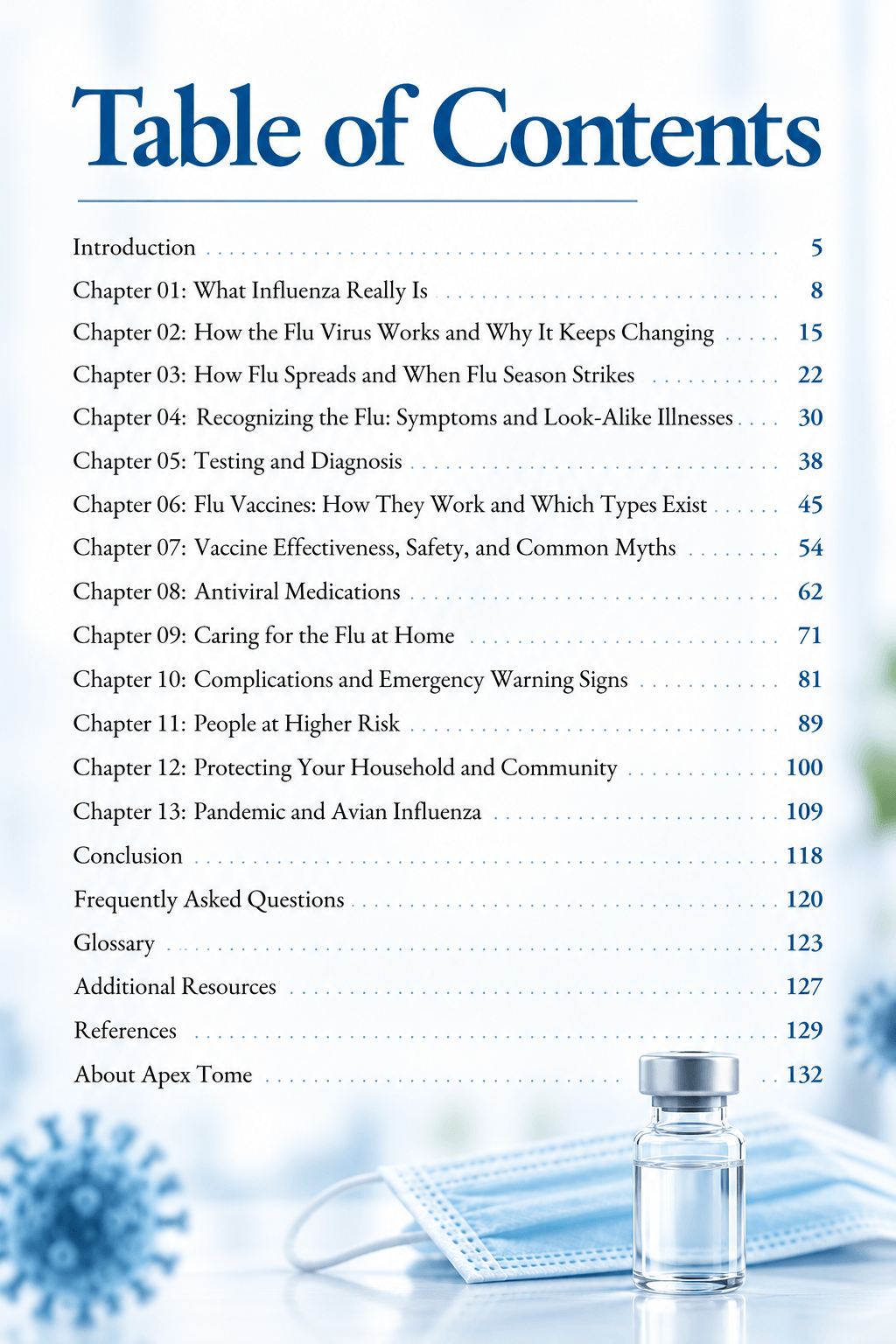
Inside this guide you will learn:
- What influenza is, and why it is not the same as a cold or “stomach flu”
- How the virus changes each year, and why that matters for vaccines
- How the flu spreads, and when people are most contagious
- How to tell the flu from colds, COVID-19, and RSV, and why symptoms alone are not enough
- What flu tests can and cannot tell you, including home tests
- How flu vaccines work, the types available, and what the effectiveness numbers really mean
- What prescription antiviral medicines do, who is prioritized for treatment, and why timing matters
- How to care for a sick adult or child at home, including common over-the-counter medicine mistakes to avoid
- The emergency warning signs in children and adults
- What people at higher risk should plan for before flu season
- How to build a simple household prevention plan
- How to make sense of news about bird flu and pandemics
Also included: key takeaways at the end of every chapter, comparison tables, a household flu season plan, a home supply checklist, 16 frequently asked questions, a glossary of more than 45 terms, and a full reference list.
Format: PDF ebook, 132 pages, 6 × 9 inch layout. First edition, 2026. Research last verified in October 2026.
Please note: This publication is for informational and educational purposes only. It is not a substitute for professional medical advice, diagnosis, or treatment. Always consult a qualified healthcare professional about your own situation.